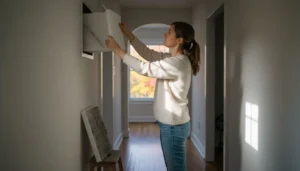
The first time I tried to deep clean my whole house in one Saturday, I quit at 2 p.m. sitting on the bathroom floor with a toothbrush and a bucket of gray water, still in yesterday’s pajamas. I’d started in the kitchen, wandered off to the bedroom for a scarf, found a drawer that needed sorting, and three hours later nothing was actually clean. That was the day I built a real deep cleaning checklist, one room at a time, so I’d stop spinning and actually finish.
This is the list I’ve run every spring and every fall for four years now. No punishing top-to-bottom marathon, just the exact order I clean each room, roughly how long each one takes me, and the parts I skip on purpose. Grab your caddy and let’s go room by room.
Jump to:
Why a deep cleaning checklist beats “just clean everything”
What wrecked my deep cleans for years was the drifting, not the scrubbing. You walk into a room, notice six things at once, start one, spot another, and your brain treats all of it as equally urgent. That’s how a “quick” deep clean eats a whole weekend and still leaves the baseboards untouched.
A written deep cleaning checklist fixes that by making one decision for you: what’s next. You don’t stand there weighing whether to do the fridge or the grout. You do the next line. That single change is why I now finish a room in the time I used to spend just deciding where to begin.
It also lets you stop. When cleaning has no end line, it expands to fill every free minute and you feel guilty the whole time. A checklist has a bottom. You hit it, you’re done, you close the door. If your day-to-day tidying is the part that keeps slipping, that’s a separate fix, and my daily cleaning routine handles the upkeep so deep cleans stay rare.
How to use this deep cleaning checklist
Three rules make the whole thing hold. First, one room, start to finish, before you move on. No wandering to the bedroom for a scarf. If you find something that belongs in another room, it goes in a “leaves this room” basket by the door, and you deal with it later.
Second, always clean top to bottom and dry to wet. Dust the shelves before you vacuum, or you’ll knock crumbs onto a floor you just did. Wipe surfaces before you mop. Gravity is doing half the work, so let it.
Third, you do not have to do the whole house in a day. I split mine across a weekend, or even two, one or two rooms at a sitting. Deep cleaning isn’t a race, and treating it like one is exactly what burned me out on that bathroom floor. If you want a lighter rhythm year-round instead, a cleaning schedule by room spreads the load so nothing ever gets truly grimy in the first place.
One safety note before you mix anything: never combine cleaners, especially bleach and ammonia, and crack a window while you work. The American Lung Association keeps a plain guide to which cleaning supplies affect your air, and it’s worth two minutes before your first spray.
The kitchen deep clean
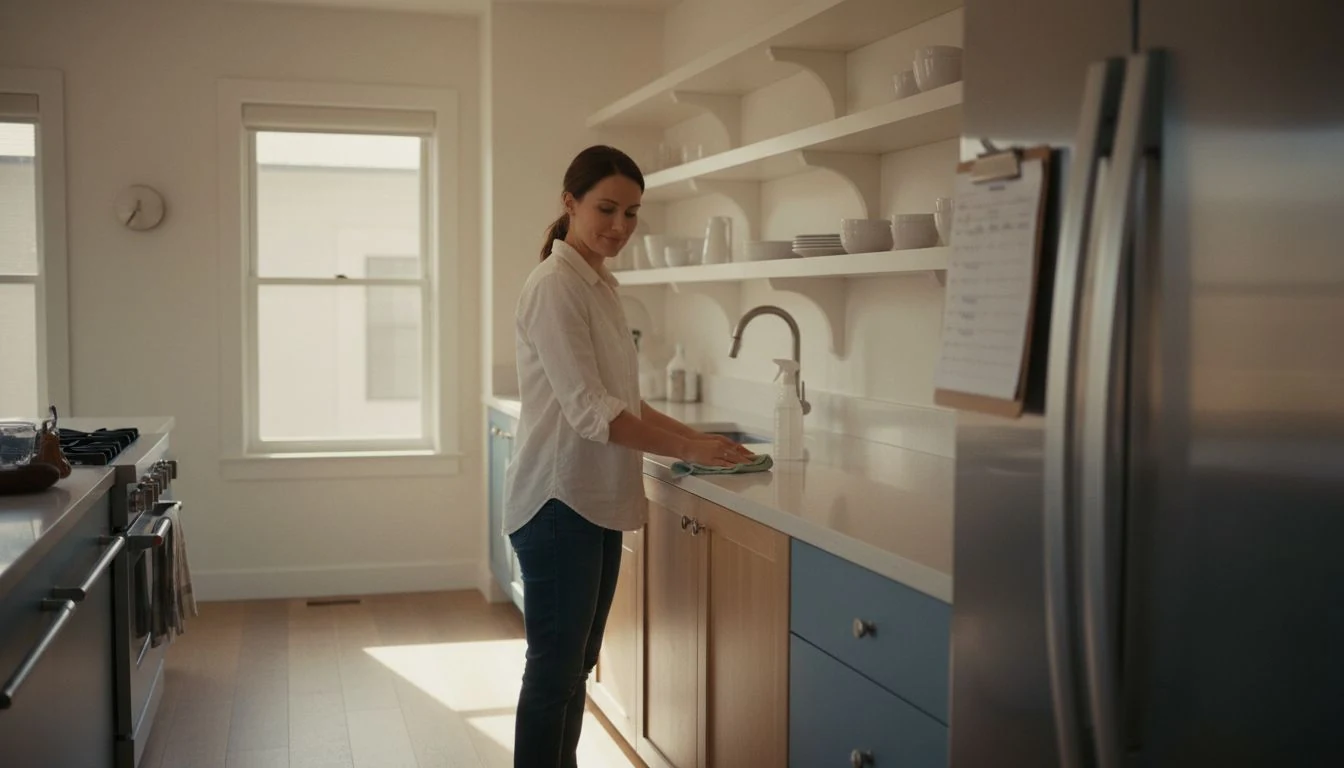
The kitchen is where I always start, because it’s the room that makes the whole house feel dirty when it’s grimy and clean when it’s not. Budget about 90 minutes if you’re doing it right the first time in a while.
Start high. Wipe the tops of cabinets and the range hood, where a film of cooking grease you’ve never once looked at has been quietly building. Then the cabinet fronts, the backsplash, and the counters. Pull the small appliances forward and get behind the toaster, that graveyard of crumbs. My microwave gets a bowl of water with a lemon half zapped for three minutes, then the softened gunk wipes off in one pass instead of ten.
Next, the fridge. Toss the expired, pull the shelves, wash them in the sink. The oven I do last and honestly not every time, because the self-clean cycle handles it. For the sink and the coffee-maker descaling, I skip the pricey sprays entirely. Plain white vinegar does both, and if you want the exact ratios, my DIY vinegar cleaning recipes lay them out. Finish by sweeping and mopping the floor, edges and under the toe-kick included.
The bathroom deep clean checklist
Bathrooms are small, which fools you into thinking they’re fast. They’re not, because every surface needs contact time. Give it 45 minutes and let the products do the waiting for you.
Spray the tub, shower, and toilet first, then walk away for ten minutes while the cleaner actually works. That pause is the whole trick. People scrub the second they spray and wonder why the soap scum won’t budge, when the label is begging them to wait. While it sits, I clear the counter completely, wipe down the vanity, and clean the mirror.
Come back and scrub in the order you sprayed. Grout gets an old toothbrush and a baking-soda paste, the one job that genuinely earns the elbow grease. Wash the bath mat and hand towels. Wipe the switch plates and door handle, the spots that carry the most germs and get cleaned the least. Toilet last, always, and that cloth touches nothing else. Then the floor. Proper ventilation matters here more than anywhere, so run the fan or open the window; the EPA’s guidance on home ventilation explains why a little airflow does so much.
Bedrooms and living spaces
These rooms feel easier and mostly are, but they hide dust in places you never think to look. Figure 30 to 40 minutes a room.
Strip the bed and wash everything, including the pillowcases you’ve been meaning to for a month. While that runs, dust from the top down: ceiling fan blades, the tops of door frames, light fixtures, then shelves and the picture frames nobody dusts. I keep a microfiber cloth on a long-handled duster for the fan, because standing on the bed to reach it is how I sprained an ankle in 2023. Learn from me.
Wipe down the baseboards, the single most satisfying line on any deep cleaning checklist once you see the before and after. Vacuum the floor, then pull the furniture out and get the dust bunnies underneath the bed and behind the couch. Flip or rotate the mattress if it’s due. Vacuum the couch cushions and fish out the stray popcorn and $1.40 in change. A calm bedroom is worth the effort, and if clutter is what’s really making yours feel heavy, decluttering so there’s less to clean is the fix that lasts longer than any scrub.
The room-by-room deep cleaning checklist at a glance
When you just want the map without the story, here it is. This is my real breakdown: the order I clean each room, the tasks people most often skip, and how long each one actually takes me, not the fantasy timing on the internet.
| Room | The tasks people skip | My real time |
|---|---|---|
| Kitchen | Cabinet tops, range hood, behind appliances, fridge shelves | ~90 min |
| Bathroom | Grout, switch plates, exhaust fan cover, under the rim | ~45 min |
| Bedroom | Ceiling fan, baseboards, under the bed, mattress rotation | ~35 min |
| Living room | Under cushions, behind furniture, light fixtures, remotes | ~40 min |
| Entryway | Door handles, light switches, mat underneath, corners | ~20 min |
Common deep cleaning mistakes to avoid
- Scrubbing the second you spray. Contact time is doing the work. Spray the tub, the toilet, the oven, then leave for ten minutes and come back to grime that wipes off instead of fights back.
- Trying to do the whole house in one day. That’s the plan that ends on the bathroom floor at 2 p.m. Split it across rooms or days; a finished kitchen today beats five half-cleaned rooms.
- Cleaning bottom to top. Dust and crumbs fall. Vacuum before you dust and you’ll just do the floor twice, so always work high to low, dry before wet.
This list assumes ordinary household dust. After a renovation, the drywall powder needs a HEPA vacuum and a top-down order, and I wrote up what that cleanup after a remodel costs when a pro does it.
What didn’t work for me
The all-in-one Saturday, obviously. I keep bringing it up because I fell for it three separate times before it stuck. The other flop was the color-coded 40-item printable I found on Pinterest, the kind with a box for “organize the junk drawer” wedged between real cleaning tasks. Deep cleaning and decluttering are different jobs, and stapling them together meant I finished neither. Sort the drawers another day.
I also tried buying a specialty spray for every surface: one for glass, one for granite, one for stainless, one for wood. Forty dollars and a cabinet full of bottles later, I use maybe three cleaners total now. Vinegar, a gentle all-purpose, and one bathroom cleaner with real staying power. More products didn’t make me cleaner, just poorer and more confused about which bottle did what.
Grab the free printable: my one-page Room-by-Room Deep Cleaning Checklist, with the exact task order and time estimates for every room, so you can print it, check the boxes, and actually stop when it’s done. Get the free checklist →
Frequently asked questions
How often should I deep clean my house?
Twice a year is plenty for most homes, a spring and a fall reset, as long as you keep up with light weekly cleaning in between. High-traffic spots like the kitchen and bathroom benefit from a mini deep clean every season. If you’re deep cleaning monthly, that’s usually a sign the daily upkeep has slipped, not that you need to scrub harder.
What’s the right order to deep clean a house?
Go room by room, and within each room work top to bottom and dry to wet: dust high surfaces, wipe mid-level surfaces, then vacuum and mop the floor last. I start with the kitchen because it sets the tone for the whole house, then bathrooms, then bedrooms and living spaces. Finishing one room before starting the next is the part that keeps you from drifting.
How long does it take to deep clean a whole house?
For an average home, plan on four to six hours of actual work, which is why I split it across a weekend rather than one exhausting day. A single kitchen runs about 90 minutes if it’s been a while, a bathroom around 45. Break it into rooms and it stops feeling like a marathon and starts feeling doable.
Get my free Home Reset Planner
The calm, room-by-room planner I use to reset my whole home without the overwhelm. Join the newsletter and I’ll send it straight to your inbox.
No spam, ever. Unsubscribe anytime. — Lena
Keep reading — more on Cleaning Routines
How Often You Actually Have to Deep Clean (The Schedule I Stopped Fighting)
How to Make Your House Smell Good All the Time (Without a Single Plug-In)
Cleaning Days: How to Clean the Whole House in One Afternoon