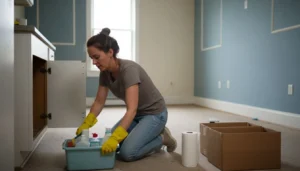
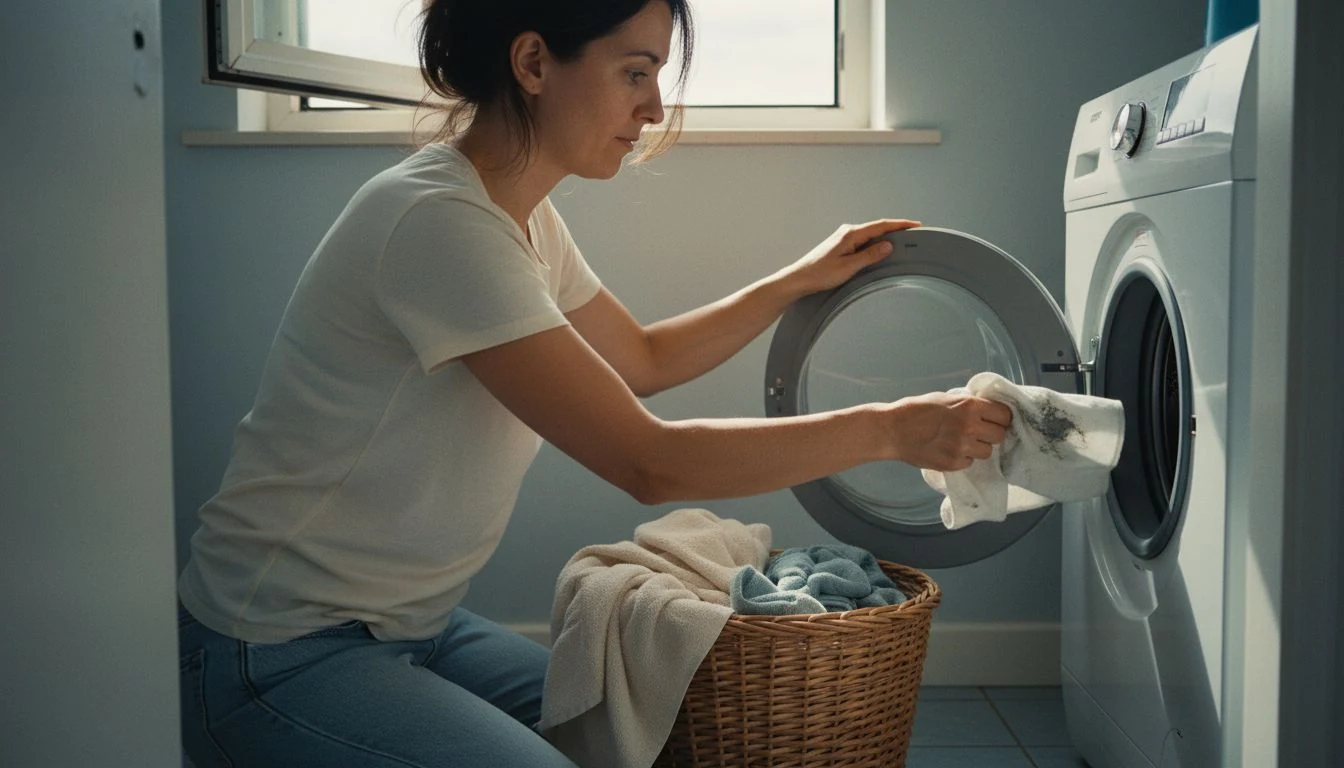
For most of last year I bought a $7 plug-in every three weeks, which is about $120 of vanilla-scented electricity, and my apartment still smelled like a gym bag by Thursday afternoon. I kept googling how to make your house smell good all the time and getting lists of things to buy. Then a friend stayed over in February, opened the washing machine to throw in a towel, and said, without any cruelty at all, “oh, that’s what it is.”
She was right. The smell was living inside the rubber seal of my washer, and in four other places I’d never once looked. What follows is the source hunt: where the odor actually comes from, what order to deal with it in, and what holds for weeks instead of forty minutes. If you want a room-by-room clean instead, my deep cleaning checklist covers that, and my vinegar cleaning recipes are the sprays I use to do it. Neither of them finds the smell for you. That’s a different job.
Masking is why nothing lasts past Thursday
A candle doesn’t remove an odor. It adds a second one on top, and your nose stops registering both after about fifteen minutes, because that’s what noses do. Meanwhile the original source is still sitting there producing more.
That’s why my plug-in budget kept climbing. Every time the smell came back I read it as the scent wearing off and bought a stronger one. What was really happening: damp fabric and a grimy seal were making odor continuously, twenty-four hours a day, and I was answering with a device that ran out.
There’s a test worth doing before you buy anything else. Leave the house for two hours with the windows shut and no candle burning. Walk back in and pay attention to the first three seconds, because that’s the only honest reading you’ll get all day. If you smell something in those three seconds, you have a source, and no product fixes a source.
The six sources I found in my own apartment
I went hunting on a Saturday morning with a flashlight and a roll of paper towels, and I found six things. I’d been living with two of them for four years.
1. The washing machine door seal. Front loaders have a rubber gasket that folds inward, and water sits in that fold after every wash. Mine had a gray film in it and a small hair tie from what I can only assume was 2023. I wiped it out with a damp cloth, dried it, and now I leave the door and the detergent drawer open between loads. That one habit did more for my apartment than every product I’ve ever bought.
2. The dishwasher filter. There’s a cylinder at the bottom of the tub that twists out. Mine hadn’t been touched since I moved in. I’ll spare you the description. It rinses clean under the faucet in about ninety seconds, and I do it on Sundays now.
3. The trash can itself, not the bag. Liners leak. The liquid runs down the inside wall and pools under the liner where you never see it. I washed the can in the shower with hot soapy water, dried it fully, and put a tablespoon of baking soda in the base. Drying it matters more than the baking soda does.
4. The kitchen and bathroom drains. Biofilm builds up in the first few inches of the drain, and the shower one had hair in it. Boiling water and a drain brush, no chemicals. If you want the honest version, I gagged.
5. Damp textiles that never fully dry. The bath mat, the dish towel, and a throw on the couch that got rained on in November. Fabric that stays damp for more than a day starts to smell, and you stop noticing your own because you live in it.
6. The fridge, which I’d been ignoring on purpose. A leaking bag of spinach at the back, plus the drip channel behind the crisper drawers. I emptied one shelf at a time so it never turned into a project. My fridge organization post has the layout I settled on afterward.
How to make your house smell good all the time, in one afternoon
Order matters, because in the wrong sequence you’ll clean something and then re-dirty it, which is how a two-hour job turns into a lost weekend. Mine took about three hours and I did it in chunks with a timer, the same way I do everything.
- Open two windows on opposite sides of the house first. Cross-ventilation, ten minutes, before you touch anything. You need a baseline.
- Strip every piece of damp fabric. Bath mats, dish towels, the throw, dog beds if you have them. All of it into the wash on hot.
- Do the machines. Washer seal and drawer, dishwasher filter, then run the washer empty on the hottest cycle it has.
- Do the wet zones. Trash can, drains, garbage disposal, and the cabinet under the sink where a bottle probably leaked at some point.
- Do the fridge. Shelf by shelf, drawer by drawer, and check the seal around the door.
- Change the HVAC filter if it’s been more than three months. Mine was gray. I’d never once thought about it as a smell issue.
- Only now, add scent. Not before. Add it before and you can’t tell what you’ve fixed.
Give yourself a week before you judge it. Soft surfaces hold odor and release it slowly, so a couch that absorbed six months of something doesn’t reset in an afternoon.
Air movement beat every product I bought
The cheapest thing on this list made the most difference, and it costs nothing at all. Ten minutes of cross-ventilation in the morning. Two windows, opposite walls, air moving through the place rather than sitting in it.
The other half is the fans you already own and probably underuse. Run the bathroom exhaust fan during your shower and for twenty minutes after, not for two. Run the range hood while you cook, and keep it going for ten minutes after the pan comes off, because cooking odor keeps traveling through the house long after dinner is done. The EPA’s guidance on improving indoor air quality puts source control and ventilation ahead of everything else, which tracks with what happened in my apartment.
One caveat worth saying out loud. If your house smells musty rather than dirty, and it gets worse after rain, you’re looking at a moisture problem. Read the EPA’s page on mold cleanup in your home before you spend a dollar on anything that sprays.
The laundry that was quietly ruining everything
My towels were the problem for two years and I blamed the building.
Three things were happening at once. I was using too much detergent, which leaves residue that holds odor. I’d start a load and then leave the house, so wet laundry sat in the drum for an hour or two. And my towels were getting folded and stacked while still slightly damp, which is the same as putting a wet cloth in a dark cabinet and hoping for the best.
What fixed it: half the detergent I’d been using, a cycle timed so I’m home when it ends, and towels hung spread out instead of folded over a bar in a thick wedge. If your laundry area is cramped and there’s nowhere to hang anything, solve that first. My laundry room organization post is where I worked out the drying space in mine.
The gym bag rule is separate, and it’s the one I’m strict about now. Anything damp comes out of the bag the same day, even if it goes straight into the hamper. A closed bag with wet clothes in it for two days will smell for a week.
How to make your house smell good all the time in a rental
All of this works in a rental, because none of it changes anything permanent. That’s the part I had backwards for years, back when I assumed my apartment just smelled like the building it was in.
The renter version, ranked by what moved the needle for me: the washer seal, the trash can, cross-ventilation, and the bathroom fan running longer than feels necessary. If your unit has an old carpet you can’t replace, one professional deep clean a year does more than any powder you sprinkle on it. I paid $140 for mine, and it was the only thing that touched the smell in the bedroom.
What you can’t fix from inside a rental: a bathroom with no window and no working exhaust fan, or damp coming through a wall. Those go in an email to your landlord, in writing, with a photo. I put that off for eleven months and it didn’t improve on its own.
What I use for scent now, and how little of it
Two things, total. A candle I light when I’m home in the evening, and a simmer pot with orange peel and a cinnamon stick when someone’s coming over. That’s the whole list, and I haven’t bought a plug-in since March.
The difference is that scent is now a small addition to a place that already smells like nothing, instead of a lid I’m holding down. Smelling like nothing is the actual goal, and it’s what every hotel room you’ve ever liked was doing.
If you’re trying to work out which products earn their place, I went through the same thing with cleaners and wrote down what survived in the cleaning products actually worth it. Short version: fewer, and unscented, so you can smell your own house.
What didn’t work for me
Carpet deodorizing powder. It went down into the carpet fibers, most of it never came back out, and my vacuum smelled like baby powder for a month afterward.
Scented trash bags, which I used for a year. They perfume the bag while the can underneath keeps quietly rotting, so you’re paying extra to hide the one thing you need to find.
An essential oil diffuser in the hallway, running on a timer. Lovely for the first two days. After that I couldn’t smell it at all, but visitors could, and one of them told me it was giving her a headache. You’re the last person to know what your own house smells like.
And bowls of coffee grounds, which I read about somewhere and tried in the fridge. It made the fridge smell like old coffee. Baking soda is boring and it works.
Grab the free printable: my one-page Source Hunt Sheet, with the six spots to check in order, the three-second doorway test, and a small monthly box for the washer seal and the filter so you never have to remember. Get the free source hunt sheet →
Match the smell to the source before you clean anything
I put this together after the fact, from my own place and my sister’s, which has two cats and a much worse hallway than mine. The last column is how long each fix held before I had to do it again, which is the part nobody mentions.
| What you smell | Where it usually comes from | What fixed it | How long it held |
|---|---|---|---|
| Sour, wet-laundry smell on clean clothes | Washer door seal and detergent drawer | Wipe the fold, hot empty cycle, leave the door open | About 6 weeks, then a 2-minute wipe |
| Old food smell in a clean kitchen | Dishwasher filter, or the can body under the liner | Rinse the filter, wash and fully dry the can | 1 week for the filter, 1 month for the can |
| Eggy or sewer-ish near a sink | Biofilm in the drain, or a dried-out P-trap | Boiling water and a drain brush, run unused faucets | 4 to 6 weeks |
| Musty, worse after rain | Moisture, not dirt | Ventilation, and finding where the water gets in | Permanent, or it isn’t fixed |
| Faint animal smell you only catch on walking in | Upholstery and pet bedding, not the pet | Everything washable on hot, weekly | 7 to 10 days |
| Last night’s dinner, still there at breakfast | Cooking odor absorbed into fabric | Range hood for 10 minutes after cooking, windows open | Same day, every day |
| Stale, closed-up, hard to place | No air movement anywhere in the house | Two windows, opposite walls, 10 minutes | About 24 hours |
Three mistakes I made learning how to make your house smell good all the time
- I added scent before I found the source. For eight months, every plug-in was a fresh piece of evidence destroyed. Once there’s vanilla in the air you can’t follow your nose to the washing machine, so you have to strip the house back to neutral and start over. Do the source hunt with nothing burning.
- I trusted my own nose in my own house. Olfactory adaptation sets in within minutes, which is why the only honest readings I ever got were the first three seconds after being out, plus the one time I asked a friend to be blunt with me.
- I cleaned surfaces and skipped machines. I wiped counters weekly for four years and never opened the dishwasher filter or the washer seal. The things that hold water and food are the things that smell, and hardly any of them are surfaces you can see.
Frequently Asked Questions
How do I make my house smell good all the time naturally?
Remove the sources, ventilate, then add almost nothing. In practice that’s the washer seal, the dishwasher filter, the trash can, the drains, and any fabric that stays damp, followed by ten minutes of cross-ventilation each morning. Once the place smells like nothing, a simmer pot of orange peel and cinnamon or one candle in the evening is plenty. The order is what makes it natural and cheap, because a house with no source doesn’t need much help.
Why does my house smell but I can’t find where it’s coming from?
Usually because you’ve gone nose-blind to it, and because the source sits inside something instead of on a surface. Leave for two hours, come back, and judge only the first three seconds. Then check in this order: washing machine seal, dishwasher filter, the inside of the trash can under the liner, drains, and any fabric that’s been damp. If it reads musty rather than dirty and worsens after rain, treat it as a moisture problem instead of a cleaning one.
How often do I have to do all of this?
Less often than you’d think, once the backlog is cleared. The washer seal takes two minutes and I do it monthly. The dishwasher filter is ninety seconds on a Sunday. Trash can and drains are monthly, the HVAC filter quarterly. The daily part is only the windows and the exhaust fan, about twelve minutes total, and it folds neatly into the daily cleaning routine I already run.
My apartment smells like nothing now, and getting there took one Saturday and roughly $12 of baking soda, cloths, and a drain brush. The plug-ins were costing me ten times that a year to hide a hair tie in a rubber seal. If you only do one thing this week, wipe the fold of your washing machine door and then leave it open. That’s the one that made my friend say something, and the one that means she never has to say it again.
Get my free Home Reset Planner
The calm, room-by-room planner I use to reset my whole home without the overwhelm. Join the newsletter and I’ll send it straight to your inbox.
No spam, ever. Unsubscribe anytime. — Lena
Keep reading — more on Cleaning Routines
How Often You Actually Have to Deep Clean (The Schedule I Stopped Fighting)
Cleaning Days: How to Clean the Whole House in One Afternoon
The Fall Cleaning Jobs You Only Need to Do Once a Year