The first properly cold night last October, I turned the heat on and the whole house smelled like a hair dryer running too long. Dust burning off, apparently, because the filter had been sitting in there since February. That was the night I threw out my old fall cleaning checklist, the one that listed every room in the house, and wrote one that only has jobs I do once a year.
There are seven. Together they take about four hours, split across two weekends, and they’re the only cleaning tasks where skipping them costs me something real. Everything else is regular cleaning wearing a seasonal costume.
Jump to:
- Why this fall cleaning checklist sorts by frequency, not by room
- The furnace filter and the vents nobody has looked at since March
- The dryer vent, which is the one that’s actually dangerous
- The machines that hide their own dirt
- The jobs that stop being possible once it’s cold
- The textiles you wash once a year and forget exist
- Your fall cleaning checklist at a glance
- What didn’t work for me
- Frequently asked questions
Why this fall cleaning checklist sorts by frequency, not by room
Almost every autumn list you’ll find is the same room-by-room walk with leaves on it. Kitchen, then bathroom, then bedrooms, then the sigh.
I have two of those on this site already and I stand behind both. My deep cleaning checklist is the room-by-room version for when a space has genuinely gotten away from you, and the fall home reset is the seasonal tidy that moves the summer stuff out and the blankets in. Neither needed a sequel.
What was missing was this list. The filter I use is one question: will I do this again before spring? If yes, it isn’t a fall job, it’s just cleaning. Wiping baseboards in October is lovely and it is not on here, because you’ll wipe them again in January.
Seven jobs survived that question. Six of them are things I’d been quietly not doing for years, which is the honest reason this list exists.
The furnace filter and the vents nobody has looked at since March
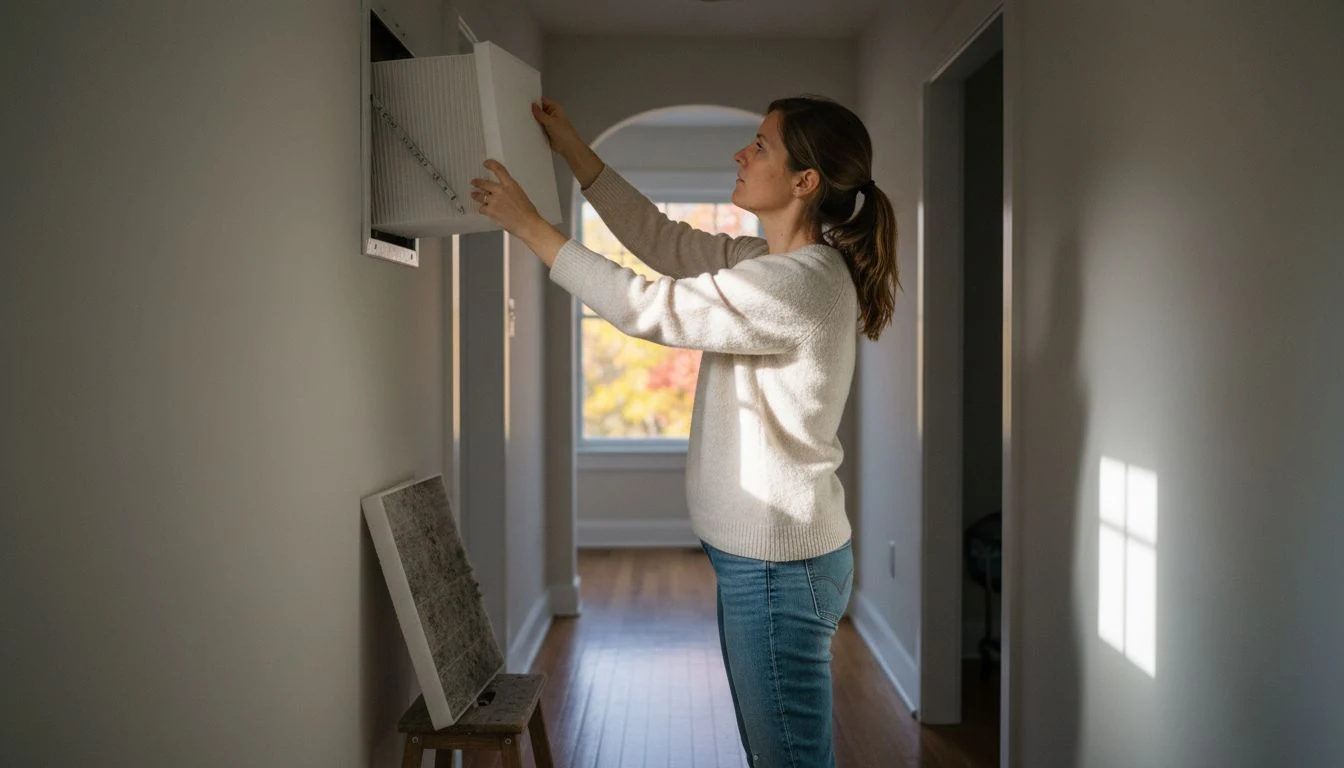
This one goes first because it’s the one that makes the house smell like burning dust, and because it takes eleven minutes.
Pull the old filter. Write the date on the cardboard edge of the new one in Sharpie before you slide it in, so next year you’re not standing there guessing like I was. Then vacuum the return grille and the floor vents with the brush attachment, and if you have kids, brace yourself for what’s down there. I found two hair ties, a game piece, and a startling amount of what I choose to believe was lint.
The EPA’s own guidance on indoor air is unglamorous and short: change or clean the filters on central heaters and air conditioners regularly, and keep indoor humidity between 30 and 50 percent, because damp air is what mold needs (EPA, Care for Your Air). That humidity number matters more in fall than people expect, because the windows are about to be shut for five months.
My one strong opinion here: buy the filters in a four-pack in September. Every time I bought them one at a time, I skipped a change, because a single filter means a separate errand and errands lose.
The dryer vent, which is the one that’s actually dangerous
I put this off for three years. Not out of laziness exactly, more that “clean the dryer duct” sat in the same mental drawer as “descale the kettle,” and that drawer never gets opened.
Then I read the numbers. Failure to clean was the leading factor contributing to the ignition of clothes dryer fires in homes, accounting for 31 percent of them, according to the U.S. Fire Administration. The thing most likely to set your dryer on fire is lint, ahead of faulty parts and old wiring.
The job itself is small. Unplug the dryer, pull it forward, twist the flexible duct off the back, and pull the lint out with your hand and then the vacuum hose. Go outside and check the exterior flap actually opens when the dryer runs. Mine was held half shut by a paper wasp nest, which explains why towels had been taking two cycles all summer.
Forty minutes, including moving the dryer twice because I forgot to check the outside flap first. If the machine is wedged in a closet and moving it is the whole obstacle, the way I set up the laundry area covers getting clearance around the appliances so this isn’t an annual wrestling match.
The machines that hide their own dirt
Three appliances get dirty in places you never see, which is exactly why they only get cleaned when something forces the issue.
Refrigerator coils first. Unplug it, pull it out, vacuum the coils at the back or underneath depending on the model. Mine were carpeted in grey fuzz and the fridge has run noticeably quieter since. While it’s pulled out, that’s also the moment to deal with what’s inside, and my fridge setup post has the bin system I use so the inside stays sorted for longer than a week.
Then the range hood filter. Mine is a metal mesh square that pops out, goes in the sink with very hot water and a scoop of dish powder, and sits for twenty minutes. What came off the first time was orange. I had lived with that filter for two years and genuinely thought the mesh was that color.
Last, the washing machine gasket if yours is a front loader. Peel back the rubber lip and wipe the fold. Then run the machine’s own cleaning cycle, empty, on hot. This is the one job here I do twice a year rather than once, so it barely earned its spot, but the smell it prevents earns it back.
The jobs that stop being possible once it’s cold
These four have a deadline attached, which is the only reason any of them get done in my house.
Window screens come out and get scrubbed with a soft brush in the driveway, then go in the garage for winter, because leaving them in blocks a meaningful amount of the low winter light you’re about to be short on. Wash the glass on the same afternoon while the screens are already off, since it’s half the work of doing it twice.
Gutters after most of the leaves are down, not before, which took me two seasons to learn. I cleared mine in early October one year, felt smug, and by November the downspout was packed solid again. Hose bibs get shut off and drained. Garden hoses come inside, coiled, or they split.
The other outdoor-adjacent job is the basement or crawlspace, and it’s about humidity rather than tidiness. Shutting the house up for winter changes how damp air behaves down there, and cardboard sitting on a concrete floor is the thing that goes wrong. My basement post covers what shouldn’t be stored down there at all, which is a shorter list than you’d hope.
The textiles you wash once a year and forget exist
Everything soft in the house gets washed on some schedule, except the four things that never do.
Pillows go in the machine, two at a time for balance, warm cycle, then in the dryer with two clean tennis balls until they are bone dry in the middle. Damp pillow filling is how you get the smell. Duvets and comforters, same idea, though mine goes to the laundromat because the home machine can’t handle it without compressing the fill into one sad corner.
Mattresses get vacuumed with the upholstery tool, seams included, then a light dusting of baking soda for an hour before vacuuming again. Curtains either go in the machine on cold or get run over with the vacuum brush, depending on how much I trust the fabric. I did not trust the linen ones and I was right about that.
Then the blankets that are about to come out of storage. Wash them now, before the first cold night, rather than pulling something out of a closet in November and going to bed with it smelling like the closet. Where they live between seasons matters here too, and my linen closet system keeps the winter stack reachable instead of buried behind the beach towels.
Your fall cleaning checklist at a glance
This is the sheet, with the honest time each job takes rather than the optimistic one, and what it costs when you skip it. That last column is the only reason any of this makes the list.
| Once-a-year job | Real time | What skipping it costs you |
|---|---|---|
| Furnace filter and vents | 11 minutes | Burning-dust smell in October, dust redistributed through every room, a system working harder than it needs to |
| Dryer vent and duct | 40 minutes | The fire risk, first. Then towels that need two cycles and a dryer that dies early |
| Refrigerator coils | 20 minutes | A louder fridge that runs constantly. Mine got quieter the same afternoon |
| Range hood filter | 25 minutes, mostly soaking | Grease that stops being removable. Two years in, mine had gone orange and stayed orange |
| Screens, glass, gutters | 2 hours, one afternoon | Less winter light indoors, and a packed downspout you can’t reach in February |
| Hose bibs and hoses | 15 minutes | Split hoses in spring, and a frozen pipe if you’re unlucky about it |
| Pillows, duvets, mattresses | 90 minutes, mostly waiting | Sleeping every night for five closed-up months on the thing you never washed |
Common fall cleaning checklist mistakes to avoid
- Doing the gutters too early. I cleared mine in the first week of October, felt organized, and had a blocked downspout by mid-November because most of the leaves hadn’t come down yet. Wait until the trees near your roofline are mostly bare, even if that feels late.
- Turning it into a whole-house deep clean. The moment I added baseboards and light fixtures to this list, it stopped being four hours and became a project I postponed. Those are regular cleaning. Keep this list to the jobs that only happen once, or it won’t happen at all.
- Putting pillows away not-quite-dry. They feel dry on the outside and hold damp in the core, and that damp is the musty smell in December. Two tennis balls in the dryer and one more cycle than you think you need.
Grab the free printable: my one-page Once-a-Year Fall Jobs sheet, with the seven tasks, the real time each takes, and a box to write the date you did it so next October you’re not guessing. Get the free fall checklist →
What didn’t work for me
The dryer vent cleaning kit was the money I’d like back. Twelve feet of flexible rods that screw together and spin on a drill, and mine unscrewed itself inside the duct on the second use. I spent longer fishing a rod out of the wall than the cleaning would ever have taken. My duct run is short enough that a hand and a vacuum hose does it, and I should have checked that before buying anything.
Doing all seven in one Saturday didn’t work either. I tried it the first year, got through four, and the remaining three slid into “next weekend” and then into never. Two weekends, four jobs and three, with the dryer vent going first because it’s the one with a real consequence attached.
I also had a reminder app fire at me on September first for three years running. I dismissed it every time. What finally worked was writing the date on the filter itself, where I’d be standing when the question came up, rather than on a phone I check in bed.
Frequently asked questions
When should I do my fall cleaning checklist?
I split it: the indoor jobs in late September, and the outdoor ones in late October or early November, once the leaves are mostly down. Doing gutters and screens too early means doing gutters twice. The only job with a hard deadline is the hose bibs, which need to be drained before your first real freeze.
How is this different from a fall deep clean?
A deep clean goes room by room and covers everything at once. This list covers only the seven things you do once a year, most of which live inside or behind an appliance. If your rooms need attention, the room-by-room deep clean is the better tool. If they’re broadly fine and you want the maintenance nobody puts on a checklist, this is that.
Do I really need to clean the dryer vent every year?
Yes, and it’s the one job here I’d tell you not to skip. Failure to clean is the leading contributing factor in clothes dryer fires at 31 percent, per the U.S. Fire Administration, and the lint filter you empty every load is not the same thing as the duct behind the machine. Forty minutes, once a year.
What if I only have time for one of these?
The dryer duct, for the safety reason. If your dryer already vents fine and you’re picking on comfort instead, the furnace filter wins: eleven minutes, and it’s the difference between the heat coming on cleanly and the whole house smelling like scorched dust for a week.
Two weekends, seven jobs, and the version of this I keep up with year after year. If the next thing on your calendar is getting the house ready for people rather than for weather, the pre-holiday declutter picks up where this leaves off.
Get my free Home Reset Planner
The calm, room-by-room planner I use to reset my whole home without the overwhelm. Join the newsletter and I’ll send it straight to your inbox.
No spam, ever. Unsubscribe anytime. — Lena
Keep reading — more on Cleaning Routines

How Often You Actually Have to Deep Clean (The Schedule I Stopped Fighting)

How to Make Your House Smell Good All the Time (Without a Single Plug-In)

Cleaning Days: How to Clean the Whole House in One Afternoon