
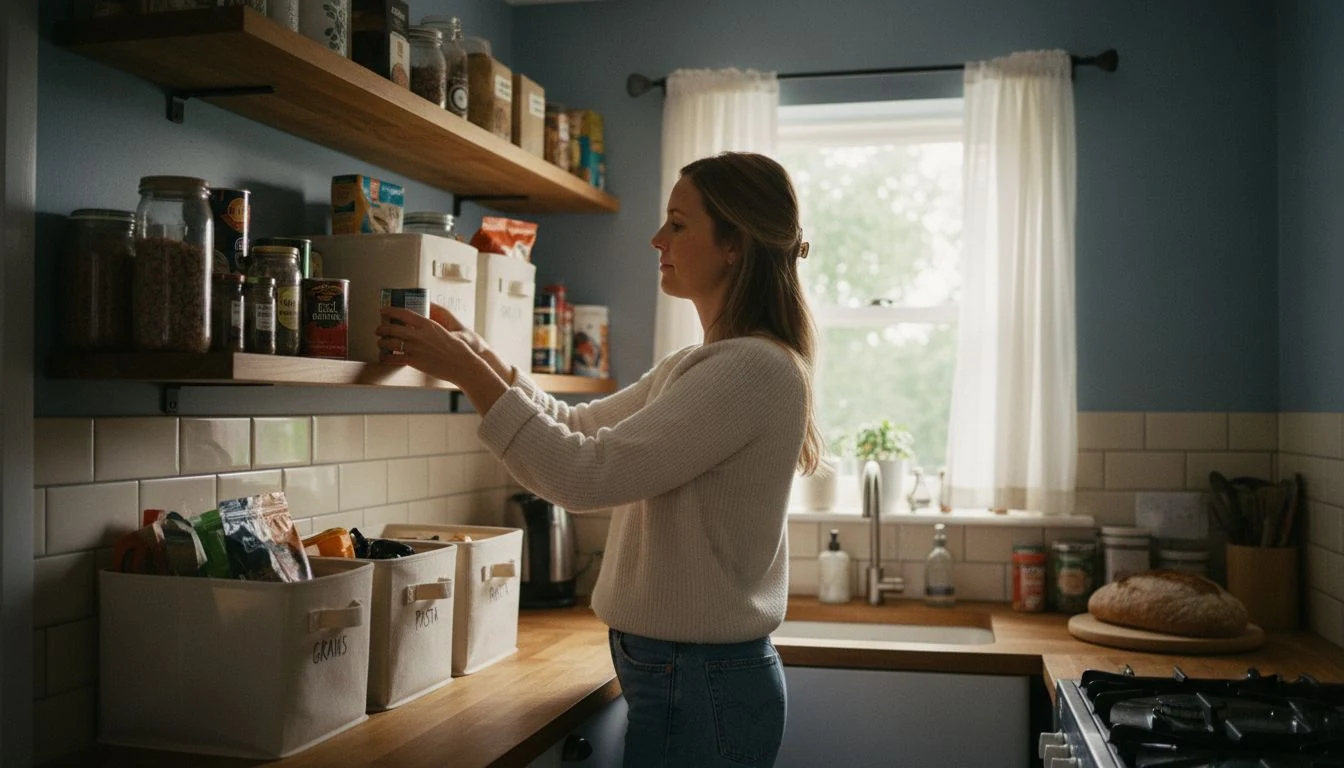
My pantry is a single shallow cabinet next to the fridge, the kind that came with a rental and was clearly designed by someone who has never owned more than three cans of beans. For two years I shoved groceries in until the door barely shut, then bought a second jar of cumin because I genuinely could not see the first one. The week I finally sorted out my pantry organization I found four open bags of rice and a can of pumpkin from a Thanksgiving I no longer remember.
This is the real-kitchen version. No marble countertops, no forty matching glass canisters, no aesthetic that falls apart the second you actually cook dinner. Just what I did in one afternoon, what it cost, the mistake I made first, and how to build a pantry that stays usable on a Wednesday when you are tired and the kids want snacks.
Why most pantry organization advice quietly fails
Most of it is built for a walk-in with custom shelving and a person who decants their pasta. Mine is 30 inches wide. So the first rule I follow now: organize for how you grab food, not for how it photographs.
The pretty-jar method failed me twice. I decanted flour into a clear container, then never wrote the date on it, and a month later I had no idea if it was still good. Real pantry organization keeps the packaging information you actually need and just makes it easier to see. Function first. The calm look is a side effect, not the goal.
Empty it first (the 25-minute version)
I set a timer and pulled everything onto the counter. Everything. It looks worse before it looks better, and that is normal. As each item came out I asked one question: would I cook with this in the next month? If no, it went in one of two piles.
- Toss: anything expired or stale. I had a baking powder from 2023 that had given up entirely.
- Donate: sealed, in-date food I bought for a recipe I never made. Two cans of chickpeas and an unopened lentil soup mix went to the food bank.
Wipe the empty shelves while they are bare. Crumbs live in the back corners and you will never have a better chance to get them.
Pantry organization that works in a real kitchen
Once it was empty I grouped by how we actually eat, not by food category. This is the part that stuck. My zones:
- Grab-and-go snacks at kid height, in one open bin so nobody excavates the whole shelf.
- Weeknight dinner at eye level — pasta, jarred sauce, canned tomatoes, the stuff I reach for half-asleep.
- Baking and once-in-a-while up high, since I touch it maybe twice a month.
- Backstock (the second can, the bulk rice) low and toward the back.
I used three cheap bins I already owned and one cleaning caddy for oils so a leak does not ruin a shelf. Total new spend: about $24 for two more bins. That is it. If you want a wider room-by-room approach once the pantry is done, my guide to organizing a small kitchen on a budget covers the counters and drawers next.
The expiration-date system that actually keeps food safe
This is the one place I get a little strict, because it is food. When I restock, the new can goes behind the old one. First in, first out, like a tiny grocery store. It took two weeks to become a habit and now I waste almost nothing.
I also stopped trusting my memory on what lasts how long. The USDA keeps a free reference for exactly this. Their FoodKeeper guide tells you how long pantry staples really last, and the broader storage basics at FoodSafety.gov settled more than one “is this still okay?” debate in my kitchen. Five minutes with those saved me from tossing things that were fine and kept me from eating things that were not.
Grab the free Pantry Reset Checklist. One page: the empty-sort-zone steps, a first-in-first-out reminder, and a shelf-by-shelf layout you can tape inside the cabinet door. Print it, work one shelf at a time, done.
Keeping it usable past week one
The honest part: my pantry does not stay magazine-perfect, and I stopped wanting it to. What keeps it functional is a two-minute reset on grocery day. Before I put new bags away, I pull the snack bin forward, push old cans up front, and recycle any empty boxes I shoved back in a hurry.
I skip the label maker now. I tried it, loved it for a week, then resented re-labeling when a bin’s job changed. A piece of masking tape and a marker does the same work and forgives you when you reorganize again in six months. If plastic bins are not your thing, my take on organizing without plastic bins has the basket swaps I made.
A quick cost and effort breakdown
Here is what each zone actually took me, so you can pick the one with the best payoff for your afternoon instead of doing all of it at once.
| Pantry zone | Time it took | What I spent | Biggest payoff |
|---|---|---|---|
| Snack bin (kid height) | 10 min | $0 (bin I owned) | No more shelf avalanche at 4 p.m. |
| Weeknight eye-level zone | 20 min | $8 (one bin) | Dinner decisions got faster |
| Expiration first-in-first-out | 15 min | $0 | Almost zero wasted food |
| Baking shelf (up high) | 15 min | $16 (two bins) | Stopped buying duplicate spices |
Common pantry organization mistakes I made first
- Decanting before labeling the date. Pretty jars with no expiration info meant I tossed good flour out of pure doubt.
- Organizing by category instead of by habit. Alphabetized cans look tidy and help no one find the weeknight pasta.
- Buying bins before emptying the shelves. I guessed the sizes, brought home two that did not fit the depth, and returned them annoyed.
Frequently Asked Questions
What is the best way to start pantry organization in a small kitchen?
Empty everything onto the counter first, toss expired items, then group what is left by how you cook (snacks, weeknight, baking, backstock) rather than by food type. Zones beat categories in a small space.
Do I need matching containers for pantry organization?
No. I use bins I already owned plus masking-tape labels. Matching jars look nice but they hide expiration dates and cost money you do not need to spend to stay organized.
How do I keep my pantry organized after the first week?
Do a two-minute reset on grocery day: pull snacks forward, move older cans to the front so they get used first, and break down empty boxes before restocking. The habit matters more than the setup.
Get my free Home Reset Planner
The calm, room-by-room planner I use to reset my whole home without the overwhelm. Join the newsletter and I’ll send it straight to your inbox.
No spam, ever. Unsubscribe anytime. — Lena
Keep reading — more on Kitchen & Pantry
Airtight Containers for Pantry: What’s Worth Decanting
How to Organize Deep Kitchen Drawers (So the Bottom Isn’t a Mystery)
Fridge Organization Aesthetic and Small Laundry Rooms: I Tried Both 2026 Trends (Worth It vs. Skip)