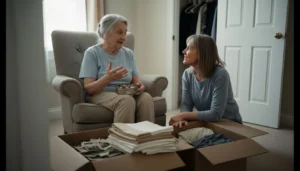

The first time I got serious about how to declutter your home, I did everything wrong. I pulled every single thing out of my bedroom closet onto the bed at 9pm on a Tuesday, stared at the mountain for forty minutes, then shoved most of it back so I could sleep. Sound familiar? That night taught me the thing nobody says out loud: the problem usually isn’t that you own too much. It’s that you keep trying to declutter your whole home in one heroic weekend, and a real life with a job and maybe kids does not leave room for heroic weekends.
So this is the calm version. Not a purge, not a minimalist conversion, not a guilt trip about the junk drawer. Just the order I’d actually follow now, after years of doing it the hard way, broken into pieces small enough that you can stop after fifteen minutes and your house still looks better than when you started. Every section here links out to a deeper guide if you want to go further on that one spot. Think of this page as the map, and the rest of the site as the trails.
Why decluttering your home feels impossible (and the fix)
Here’s the part that took me an embarrassingly long time to figure out. Clutter isn’t a character flaw. It’s a backlog. Every unmade decision (the jeans that don’t fit, the cables to nothing, the “I might read this”) just sits there waiting, and your brain registers every single one as a tiny open tab. That’s not me being poetic, by the way. There’s real research on this.
A study from the National Institutes of Health and work out of UCLA’s family-life center both found that the more stuff people had on their surfaces, the higher their stress hormones ran, especially for women. The mess is taxing you, literally, at the hormone level. Which means the fix isn’t more willpower. It’s smaller batches and a fixed order, so you’re never staring at the whole mountain at once. If you want the numbers on what clutter actually costs us in time, money, and sanity, I pulled them together in this roundup of home organization statistics.
Once that clicked for me, the guilt mostly evaporated, which mattered more than I expected. I’d spent years treating my cluttered house as proof I was lazy or scattered. I’m not. I just had a backlog and a bad strategy. When you stop framing it as a personal failing and start framing it as a queue you work down a little at a time, the whole thing gets lighter. You’re not fixing yourself. You’re just clearing a list.
Start with the easy wins, not the emotional stuff
Whatever you do, do not start with the photo albums. Or the box of your grandmother’s letters. Or the kids’ baby clothes. Those decisions are heavy, and if you lead with them you’ll burn out by item nine and decide decluttering “isn’t for you.”
Start somewhere with zero emotional weight. Expired pantry stuff. The bathroom cabinet full of crusty sample-size lotions. The single-sock graveyard. I always begin with trash and obvious expired things because you get a visible win in about eight minutes and that little hit of momentum is the whole game. If you’re sitting there genuinely frozen about where to begin, I wrote a full walkthrough on what to declutter first when you’re overwhelmed that maps out the exact low-stakes order.
The 15-minute system I actually use
Forget the all-day reset. Here’s the loop I run, and it’s boring on purpose:
- Set a timer for 15 minutes. Not 30. Fifteen is short enough that you’ll actually start, which is 90% of the battle.
- Pick one drawer, one shelf, or one surface. One. Not “the office.” A single zone you can finish.
- Make three piles only: keep, donate, trash. No “maybe” pile. Maybe is where clutter goes to live forever.
- Deal with each thing completely. Trash goes in the bag now. Donate goes in a box by the door now. No half-sorted bins left out overnight.
- When the timer goes, stop. Even mid-shelf. Take the donate box to the car so it leaves the house this week.
That’s it. One loop a day adds up faster than you’d think. My first try I skipped the “take it to the car” step and three donate boxes sat in my hallway for a month, slowly becoming new clutter. Learn from that. The exit matters as much as the sorting. If you want a structured month of these loops with a checkable calendar, the 30-day declutter challenge is the version I send to friends who want it laid out for them.
Grab the free Declutter Your Home Starter Plan (printable)
I turned this whole order into a clean one-page printable: the room sequence, the 15-minute loop, and a little checklist so you always know the next tiny step. Stick it on the fridge and just work down the list.
Go room by room, in this order
Once you’ve got the loop down, give it a path. I move through the house in the order that gives the biggest visible payoff for the least emotional cost, so motivation keeps building instead of draining.
The kitchen first, because it’s the room you stand in every day and a clear counter changes how the whole house feels. If yours is tight or you rent, I broke down every trick in how to organize a small kitchen on a budget. Then bathrooms (fast, mostly trash), then closets and bedrooms, saving anything sentimental for last when your decluttering muscles are warm. The goal isn’t an empty house. It’s a home where the stuff you kept actually has a place to live.
Roughly how the order shakes out for me, so you can see the logic:
- Kitchen. Counters first, then one cabinet a day, then the dreaded under-sink. Highest daily payoff.
- Bathrooms. Almost all of it is expired or empty. Fast confidence boost.
- Entryway and hall. The drop zone where everyone’s stuff piles up. Clearing it stops the spread.
- Closets and bedrooms. Clothes, shoes, the “what is this even” shelf.
- Sentimental and paperwork. Last, on purpose, when you’ve got practice and momentum.
You’ll notice I don’t say “do the basement” or “tackle the garage.” Those are their own multi-week projects, and bolting them onto this list is how people quit. Get the lived-in rooms calm first. The garage will still be there, and you’ll have a working method by the time you reach it.
Keep it from creeping back
This is the part the big tidy-up shows skip, and it’s the part that actually matters. Decluttering once is easy-ish. Staying decluttered when real life keeps happening is the hard skill, and it’s almost entirely about systems, not discipline.
Two things hold the line in my house. First, a “one in, one out” habit for the categories that breed (mugs, kids’ toys, water bottles). New mug comes in, an old one goes out the same day. It feels strict for about a week, then it just becomes how you live. Second, a light recurring reset so clutter never gets a head start. I keep a loose cleaning schedule by room taped inside a cabinet so I’m not re-deciding the whole thing every week.
I’ll also add a “reset basket” in the rooms that get messy fastest. Anything that drifts out of place lands in the basket, and once a day I walk it around and put things back where they go. It takes maybe five minutes and it keeps surfaces from quietly filling up again. And if you’ve got little ones undoing your work in real time, you are not failing. That’s just physics. My survival system is here: how to keep a tidy home with kids.
Use the seasons as built-in reset points
I stopped trying to keep the house perfect year-round (impossible, exhausting) and started leaning on natural turning points instead. Seasonal resets give you a reason to circle back without it feeling like one more chore you’re behind on.
A couple times a year I do a bigger pass tied to the calendar. The fall home reset checklist handles the back-to-school chaos, and the summer home reset clears out the winter heaviness and sets up for slower days. Both are room-by-room so you’re never wondering what’s next.
The holiday season needs its own plan
November through January is its own beast. New stuff floods in, the house fills with people, and the last thing you want is to be frantically clearing junk drawers the morning guests arrive. I’ve done that. It’s not fun.
So I front-load a tiny bit of decluttering before the rush, fifteen minutes a day, so I’m coasting instead of scrambling. The full low-stress approach is in how to declutter before the holidays, and it genuinely changed how I feel walking into December.
A gentler method when the standard purge isn’t working
Some weeks the keep/donate/trash sprint just doesn’t fit your brain, and that’s allowed. When I’m low-energy or the regular method feels like too much, I switch to a softer, slower rhythm that still moves the needle.
The one I keep coming back to is the Sunday butterfly method, a low-pressure way to drift through the house dealing with one thing at a time. It sounds twee. It works, and I was as surprised as you’ll be.
You don’t need fancy products to do this
Let me save you some money. You do not need a label maker, forty matching acrylic bins, or a single thing from a viral pantry video to declutter your home. The bins come after you’ve cleared, not before, and most of mine are dollar-store or shoeboxes I already had.
The only place I’ll spend is on a couple of cleaning products that genuinely earn their keep, because once a surface is clear I want wiping it down to take ten seconds. If you’re curious which ones survived my testing (and which famous ones I returned), here’s the honest list: the cleaning products that are actually worth it.
Where to actually start tonight
If you read all of that and felt the familiar urge to go pull everything out of a closet, please don’t. Do this instead: grab a trash bag, set a timer for 15 minutes, and clear one single surface, the kitchen counter, the nightstand, the bathroom shelf. Just one. Toss the trash, box the donations, and put the box by the door so it leaves the house this week.
That’s the whole method, and it’s the only step that matters tonight. You don’t need to have a plan for the garage or a system for the kids’ art before you begin. You just need fifteen minutes and one surface. Tomorrow you do it again somewhere else, and a slightly calmer house starts building itself one small loop at a time. That’s all decluttering your home ever really is.
How to Declutter Your Home: Which Method Fits You
There’s no single right way to declutter your home, only the one you’ll actually stick with. Here’s an honest comparison so you can match a method to your energy, your time, and how your brain works.
| Method | How it works | Best for | Watch out for |
|---|---|---|---|
| By category (KonMari-style) | Tackle all of one type at once: every shirt, every book | People who want a deep, all-in reset | It’s emotionally heavy and needs big blocks of time |
| By room or zone | Finish one small area before moving on | People who need visible wins to stay motivated | Easy to keep “starting” the same easy room |
| The 10-minute timer | Set a timer, declutter until it rings, stop | Busy folks and anyone who feels overwhelmed | Slow progress if you only do it once in a while |
| One-in-one-out | Something leaves every time something new arrives | Maintaining a home that’s already pared down | Won’t clear an existing backlog on its own |
| The four-box sort | Keep / donate / relocate / trash, every item picks a box | Anyone who freezes on decisions | The “relocate” box can become a new pile |
The traps that stall a whole-home declutter
- Buying organizers before you’ve decluttered. Bins bought too early just give clutter a tidier place to hide, so cut the volume first and shop last.
- Creating a “maybe” pile with no deadline. Undecided items need a sealed, dated box, otherwise “maybe” quietly becomes “keep everything” by default.
- Trying to do the entire house in one weekend. Burnout undoes more progress than slow does, so smaller and steadier almost always beats one heroic, exhausting sprint.
FAQ
What’s the best order to declutter your home?
Start with low-emotion, high-visibility zones and work toward the sentimental stuff last. In practice that means trash and expired items first, then the kitchen, then bathrooms, then closets and bedrooms, then anything with memories attached. Leading with the easy wins gives you momentum, and saving photos and keepsakes for the end means you’re making those harder decisions after your decluttering muscle is already warmed up. Trying to do it in room order alone, with no regard for emotional weight, is the fastest way to stall out.
How do I declutter when I feel completely overwhelmed?
Shrink the task until it’s almost laughably small. Set a 15-minute timer and pick one single drawer or surface, not a whole room. Make only three piles (keep, donate, trash) with no “maybe” pile, and deal with each item completely before moving on. When the timer goes off, stop, even mid-shelf, and physically remove the donate box from the house that week. Overwhelm comes from looking at the whole mountain. The fix is never looking at the whole mountain.
How long does it take to declutter a whole house?
Honestly, longer than any weekend-makeover show would have you believe, and that’s fine. If you run one 15-minute loop a day, most homes feel dramatically calmer within three to four weeks, with the deeper sentimental layers taking a bit longer. The 30-day challenge is built around exactly this pace. The slow version sticks because you’re building a habit, not just clearing a mess you’ll rebuild in two months.
Should I buy storage bins before I start decluttering?
No, buy them after, if at all. Buying bins first is how you end up with neatly organized clutter you should have let go of. Clear the space completely, figure out what’s actually staying and where it should live, and only then buy storage to fit what’s left. Most of the time you’ll need far fewer containers than you’d expect, and plenty of mine are shoeboxes and dollar-store baskets, not anything expensive.
How do I keep my home decluttered once it’s clean?
Systems, not willpower. A simple “one in, one out” rule for the categories that multiply (toys, mugs, water bottles) stops new clutter at the door, and a light recurring reset, like a loose cleaning schedule by room, keeps anything from piling up between bigger passes. Lean on seasonal reset points a couple times a year instead of trying to hold a perfect house year-round. Decluttering once is a task. Staying decluttered is a handful of small habits running quietly in the background.
Get my free Home Reset Planner
The calm, room-by-room planner I use to reset my whole home without the overwhelm. Join the newsletter and I’ll send it straight to your inbox.
No spam, ever. Unsubscribe anytime. — Lena
Keep reading — more on Declutter Challenges
How to Declutter Sentimental Items (When Everything Feels Important)
How to Help a Parent Downsize (Without the Fights)

Where the Clothes Actually Go After You Clean Out Your Closet