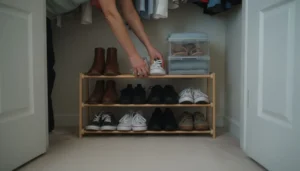
I once spent a Saturday and about $140 turning my hall closet into a wall of matching clear plastic bins. It looked incredible for roughly four months. Then the lids started warping, two cracked when my son sat on one, and the stack of “lifetime” totes went cloudy and faintly yellow. That was the afternoon I got serious about organizing without plastic bins, not because of some aesthetic rule, but because I was tired of rebuying the same containers every couple of years.
So this is the honest version of the switch. What I replaced, what it actually cost me, where woven baskets genuinely work better, and the two spots where I quietly kept the plastic because nothing else held up. No purging your whole house in a weekend. Just a slow, sane swap that stuck.
Why I finally quit plastic bins for good
The cracking was the last straw, but it wasn’t the only reason. My clear totes had that faint chemical smell every time I opened them after a hot week in the closet. The lids never quite matched after the first reshuffle. And every spring I’d find one more that had gone brittle and split along the bottom seam.
There’s a bigger picture too. Most of those bins are made to be cheap, not to last, and when they break they’re nearly impossible to recycle curbside. The EPA notes that the recycling rate for most plastics stays low, which means my broken totes were heading straight to the landfill, three or four at a time, every year. I’m not a zero-waste purist. But buying the same thing on repeat, knowing it’ll end up in the trash, finally stopped feeling like a system. It felt like a subscription I never signed up for.
The 2026 shift away from plastic toward natural materials, what the design crowd has started calling biophilic decluttering, lined up with what I wanted anyway: a home that felt calmer and a closet that didn’t crackle when I touched it.
What organizing without plastic bins actually costs
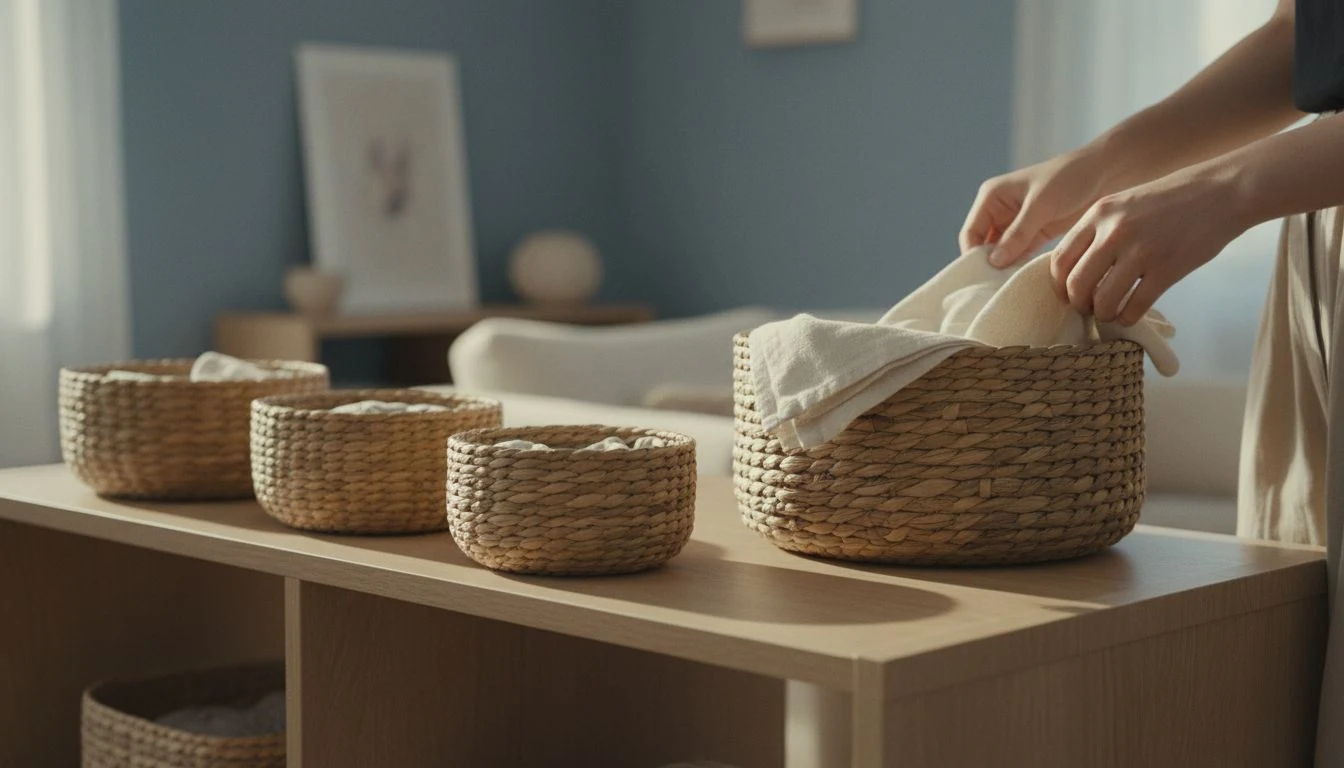
I’ll be straight about the money, because it nearly stopped me before I started. Natural baskets cost more up front, and you have to make peace with that. A six-pack of clear plastic bins ran me about $24. A single decent seagrass basket of the same size? Anywhere from $18 to $35.
That math looks terrible until you stretch the timeline. I’m three years into my first set of water hyacinth baskets and they haven’t cracked, yellowed, or smelled like anything but a faint grassy warmth. My plastic totes never made it past two years. So the real cost of organizing without plastic bins is a higher first bill and a much lower second one. You buy once and stop thinking about it.
The trick that saved me money was refusing to do it all at once. I bought baskets only as plastic bins failed, two or three at a time, and only for the rooms people actually see. If you want a slower on-ramp, my guide on what to declutter first is a gentler place to begin than a shopping cart.
The natural materials I actually reach for now
Not all natural baskets are equal, and I learned that the expensive way. Below is the honest rundown of what earned a spot in my house and what each one is good at.
| Material | Best for | What to know |
|---|---|---|
| Seagrass | Living room, blankets, toys | Tough and structured, holds its shape under weight |
| Water hyacinth | Shelves, laundry, pantry overflow | Lighter, slightly softer weave, very forgiving on price |
| Cotton rope | Kids’ rooms, bathroom, anything you bump into | Soft, washable, collapses flat when empty |
| Wood or bamboo | Desk, entry tray, drawer dividers | Rigid and clean-lined, wipes down in a second |
The one I’d skip for most people is anything labeled “rattan” at a suspiciously low price. Mine started shedding little splinters within a month. Cotton rope bins, on the other hand, have been the quiet winner: my daughter has thrown hers across the room more times than I can count and it just flops and survives.
Room by room, where woven baskets win
Baskets aren’t a whole-house answer, and pretending otherwise is how you end up with a damp problem later. But in the dry, visible parts of the house, they beat plastic on almost every count.
In the entryway, a low seagrass basket catches shoes and the one stray soccer ball without looking like a storage warehouse. In the living room, two larger ones swallow throw blankets and the kids’ overflow toys, and because they look intentional, I don’t feel the need to hide them. On open kitchen shelves, smaller water hyacinth bins corral the snack chaos, which pairs well with the systems in my post on how to organize a small kitchen.
The bedroom closet was the real proof. The same shelf that used to hold cracked plastic now holds three matched baskets, and a year in, nothing has warped. If you’re rebuilding a room from scratch, my room-by-room decluttering guide walks through the order I’d do it in.
Grab the free Basket Swap Planner
I made a one-page printable that lists every room, the basket size that fits a standard shelf, and a “keep plastic here” column so you don’t overspend. Stick it on the fridge and swap one zone at a time, no pressure, no full-house purge.
Where plastic still wins, and why I kept some
This is the section the prettier blogs leave out. Natural fiber and moisture do not get along, and learning that nearly cost me a basket of winter sweaters. I tucked a woven bin under my bathroom sink, felt smug about it for a few weeks, then opened it to a musty smell and the first ghost of mildew on the bottom.
Damp air is the enemy. The CDC is clear that mold grows wherever there’s moisture, and a closed natural basket in a humid spot is basically an invitation. So I kept plastic exactly where it earns its keep: under sinks, in the garage, in the basement, and for anything seasonal that sits sealed for months. Clear, washable, mold-proof plastic is the right tool there.
So my honest rule is simple. Baskets for the dry rooms you live in and look at. Plastic for the wet, hidden, sealed-for-months zones. Forcing natural materials into the garage just buys you a future mold problem with prettier styling.
How to start organizing without plastic bins on a budget
If I did it over, I’d move even slower. Don’t toss a single working plastic bin to make room for baskets. Demote them instead: the totes that still seal fine get moved to the garage and under-sink jobs, and the baskets take over the visible shelves they vacate. Nothing goes to the landfill before it has to.
Measure your shelf depth before you buy anything, because a basket that’s two inches too deep to slide back is a $30 mistake you’ll resent daily. Buy in small batches so you can return what doesn’t fit the space or your real life. And start with one room, ideally the one that bugs you most when you walk in. For me that was the entryway, and watching it go from plastic clutter to one calm basket is what kept me going. If you want a seasonal nudge, fold the swap into a bigger reset like my summer home reset checklist so it doesn’t become its own overwhelming project.
That’s really the whole method. Slow, room by room, plastic demoted instead of dumped. A year from now your visible shelves look calmer, your closet stops crackling, and you’re not standing in a big-box aisle buying the same cracked totes for the third time.
Smart Swaps for Organizing Without Plastic Bins
You can keep things tidy without a wall of plastic. Here is what to reach for instead when you are organizing without plastic bins, and where each option shines.
| Swap | Best for | Why it works |
|---|---|---|
| Woven baskets | Blankets, toys, open shelves | Soft look, hides clutter, easy to carry |
| Glass jars | Pantry staples and small items | See contents at a glance, lasts for years |
| Wooden crates | Garage, entryway, books | Sturdy, stackable, and they age well |
| Fabric bins | Closets and drawers | Collapsible and gentle on folded clothes |
| Metal tins | Craft and office bits | Durable and easy to label and wipe clean |
Pitfalls when ditching plastic bins
- Replacing everything at once. Swap as bins wear out so it stays affordable and low-waste.
- Forgetting to label. Natural materials hide contents, so label baskets and jars.
- Buying without measuring. Baskets and crates vary; measure the shelf before you buy.
FAQ
Are plastic storage bins actually bad for organizing?
Not bad, just overused and short-lived. Cheap plastic bins crack, warp, and yellow within a couple of years, and most can’t be recycled curbside, so they end up in the landfill. The smarter move is to keep plastic for wet or hidden zones like under sinks and the garage, and switch the dry, visible rooms to natural baskets that last far longer and look calmer.
What can I use instead of plastic storage bins?
Woven natural baskets are the main swap: seagrass for heavy, structured loads, water hyacinth for shelves and laundry, and cotton rope bins for kids’ rooms and anything you bump into. Wood or bamboo trays work for desks and entryways. Each holds shape better than you’d expect and, unlike plastic, gets prettier with age instead of more brittle.
Do natural baskets get moldy?
They can, if you put them somewhere damp. Natural fiber absorbs moisture, so a closed basket under a sink, in a humid basement, or in a steamy bathroom is a real mildew risk. Keep baskets in dry, ventilated rooms and leave the moisture-prone spots to washable plastic. Used in the right rooms, a quality basket lasts for years with no mold at all.
Get my free Home Reset Planner
The calm, room-by-room planner I use to reset my whole home without the overwhelm. Join the newsletter and I’ll send it straight to your inbox.
No spam, ever. Unsubscribe anytime. — Lena
Keep reading — more on Storage Solutions
Shed Organization Ideas for the Fall Clean-Out
Wrapping Paper Storage Ideas That Stop the Crushed-Roll Problem
Floating Shelves for Small Spaces: Where They Work (and Where They Fall Off the Wall)