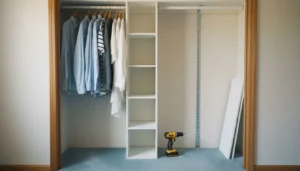
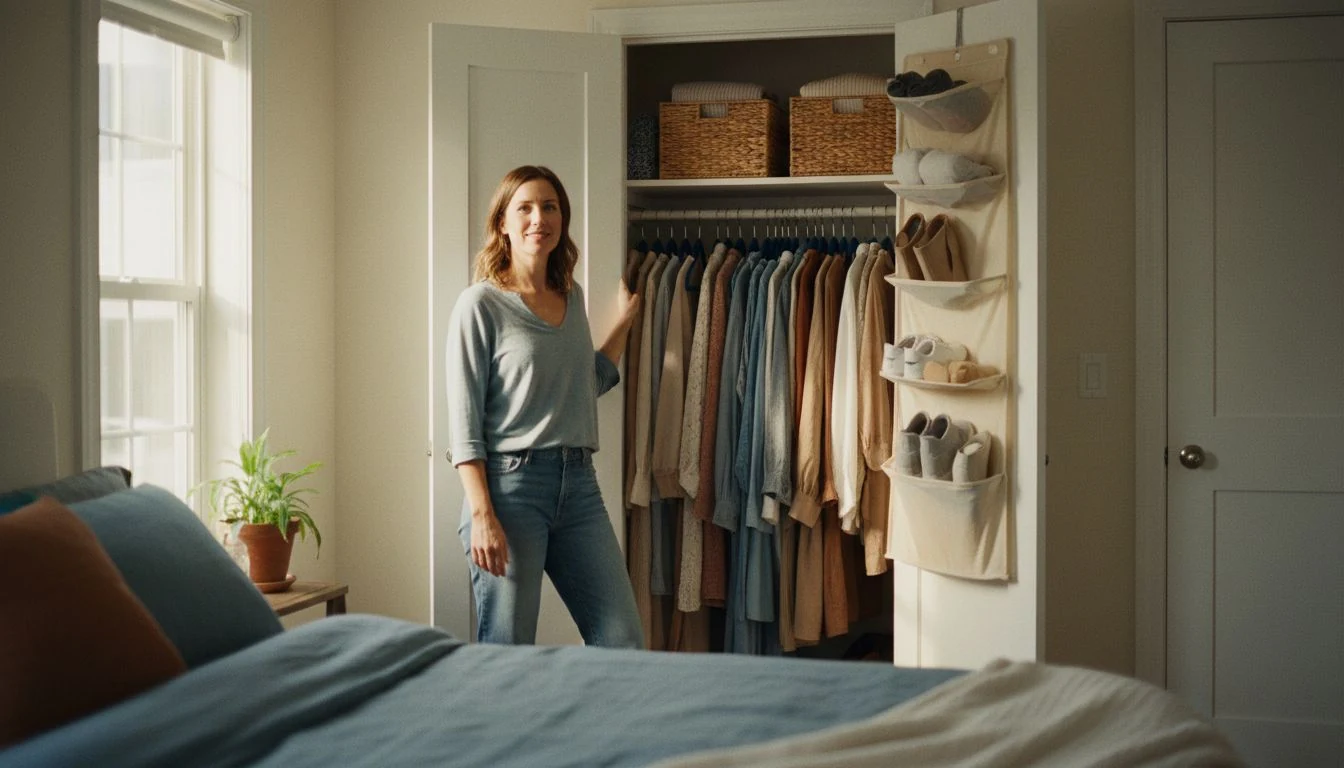
My rental closet is exactly 24 inches wide. One sad rod, one warped shelf, and a sliding door that only opens halfway because the dresser lives in front of it. For almost three years I treated the whole thing as a lost cause and just let sweaters avalanche onto the floor every time I reached for one. Then I spent a single Sunday and about $52 on small closet organization ideas that needed zero drill holes, and it finally holds everything without the daily landslide.
This is the renter version. No “before you start, install a custom system” advice that assumes you own the walls. Just what actually fit, what it cost me, the one thing I bought twice because I measured wrong, and how I’d do it again this weekend if I were starting from a pile on the floor.
Why most small closet organization ideas fail in a rental
Pinterest closets are built for people with stud finders and landlords who don’t exist. Most of those gorgeous walls of cubbies are screwed into drywall, which is a deposit you’re never getting back. So the first rule here is simple. If it needs an anchor, a bracket, or a drill, it’s out.
The second reason they fail is that people organize before they purge. I did this. I bought a slim hanging shelf, stuffed my full wardrobe into it, and a week later it sagged sideways like a drunk accordion. The container never fixes the volume problem. You have to take stuff out first, and you have to be a little ruthless about it.
And the third reason is depth. A standard reach-in closet is around 24 inches deep, and anything you store behind the front 14 inches basically disappears forever. Half of small-space organizing is just refusing to let that back zone become a junk cave.
Empty it first (the 20-minute version)
Pull everything out. I mean everything, onto the bed so you can’t quit halfway and shove it back. Then sort into three piles: wear it, don’t wear it, not sure. The “not sure” pile is the honest one, and it’s usually where the dead weight hides.
My rule is one season at a time. If it’s June and I haven’t touched it since last June, it leaves. That one pass took 23 garments out of my closet, which is the only reason any of the later ideas fit at all. If the whole thing feels paralyzing, I wrote a gentler walk-through in what to declutter first when you’re completely overwhelmed that takes the pressure off picking a perfect starting point.
Before you buy a single organizer, “shop your home” too. I found two baskets in the garage and a tension rod in a drawer, which knocked maybe $25 off my list. The EPA’s reduce-and-reuse basics is genuinely the cheapest organizing advice there is: use what you already own before you add more to the house.
Small closet organization ideas that don’t damage walls
This is the heart of renting. You want vertical storage that grabs the door, the rod, and the ceiling space, none of which require a drill.
- Over-the-door organizer. A 24-pocket hanging shoe holder cost me $14 and now holds shoes, yes, but also scarves, sunscreen, and the chargers that used to live in a drawer of chaos. It hooks over the top of the door. No hardware.
- Tension rod, two ways. One mounted low across the bottom doubles as a second hanging zone for shirts. One mounted vertically in a corner holds tall boots upright. A pack of two ran about $11.
- Command hooks on the side wall. Bags, belts, a robe, the tote I use daily. The strong ones hold 5 pounds each and peel off clean when I move out.
- Slim velvet hangers. Boring, but they shaved real inches. Forty of them replaced my bulky plastic ones and gave me back almost a full foot of rod. Clothes stop sliding off, too.
Here’s my one warning. I bought a fabric “hanging shelf” first, the kind that drapes over the rod, and it ate my hanging space without holding much. Returned it. The over-the-door rack does the same job without stealing the rod, so start there.
Double your hanging space for under $40
The single biggest win in a small closet is going from one rod to two. If you have a stretch of shirts, jackets, and folded-over pants, you’re wasting the bottom three feet of the closet on air.
A hanging double-rod extender solves it for around $15. It clips onto your existing rod and drops a second bar below it, instantly doubling the space for anything short. I put work tops on top and my husband’s shirts below. The floor that used to collect single shoes and dust now has a clear path.
If your closet is wide but shallow, a free-standing garment rack outside the closet can take your off-rotation pieces so the closet only holds this month. I treat the closet like prime real estate and refuse to let January coats squat in June.
Grab the free Small Closet Reset Checklist
I turned this whole process into a one-page printable: the 20-minute empty-it sort, the exact damage-free products that fit a reach-in, and the measure-before-you-buy numbers so you don’t return things twice like I did. Sign up below and it lands in your inbox.
The shelf and floor zone nobody uses right
The top shelf is where good intentions go to die. It’s too high to see, so things get stacked flat and forgotten. Fix it with two cheap moves. First, use one or two open baskets up there, labeled, so the shelf holds categories instead of a precarious tower. Pull the basket down, take what you need, slide it back. Second, store the rarely-needed stuff up high on purpose. Extra bedding, the one fancy clutch, off-season hats.
For the floor, get everything off it that you can. Shoes go in the over-the-door rack or a low shelf, not in a heap you kick through each morning. If you do keep bins down there, woven baskets look calmer and hold their shape better than cracking plastic totes. I made that switch everywhere and never looked back, which I get into in organizing without plastic bins.
One measuring note that saved me real money: a basket two inches too deep to slide onto your shelf is a $20 mistake you’ll resent daily. Measure shelf depth and height before you buy a single container. I learned this by returning a set that wouldn’t clear the rod.
Off-season storage when there’s no attic
Renters rarely get a basement or attic, so off-season clothes have to disappear inside the bedroom. The two spots that work: under the bed, and the very top shelf of the closet. Under-bed fabric storage bags with a zipper run about $10 each and slide flat, holding a whole season of sweaters out of sight. When summer hits, the winter coats go up and the under-bed bags hold sandals and swimsuits instead.
This rotation is the trick that keeps a small closet from re-cluttering by August. You’re not storing your whole wardrobe at once, you’re storing one season and parking the rest. If you want the bigger picture of working room by room without burning a whole weekend, my calm, room-by-room declutter guide walks through the same slow approach for the rest of the house. The same renter-friendly logic works in tight kitchens too, which I cover in how to organize a small kitchen on a budget.
A small closet organization plan for this weekend
If I were starting from a floor pile right now, here’s the order I’d go. Empty it onto the bed and run the three-pile sort. Measure the closet depth, height, and rod length, and write the numbers on your phone. Shop your home for baskets and rods before buying anything new. Then add, in this order of impact: a double-rod extender, slim hangers, an over-the-door rack, and only then any baskets that genuinely fit your measured shelves.
That’s roughly $50 and one Sunday. Buying durable and buying once is its own kind of frugal, and the EPA’s notes on reducing waste back up the boring truth that the cheapest closet is the one you stop rebuying every two years. A year from now you open the door and everything has a spot, the floor is clear, and you got every cent of your deposit because you never touched a wall.
Mapping the Zones in a Small Closet
Most small closet organization ideas work better once you stop thinking “shelf” and start thinking “zones.” Here is how to give every height of your closet a job so nothing gets lost in the back.
| Zone | What goes here | Why it works |
|---|---|---|
| Eye level | Daily clothes and go-to outfits | Reaching here is effortless every morning |
| Upper shelf | Off-season and rarely used items | Out of the way but still visible in a bin |
| Hanging rod | Wrinkle-prone tops, dresses, jackets | Keeps the items you fold worst smooth |
| Floor | Shoes and a single laundry basket | Contained, so the floor never becomes a pile |
| Door or wall | Bags, belts, and accessories on hooks | Uses dead vertical space you already own |
Where small-closet plans usually go wrong
- Stacking folded shirts too high. Anything past five high topples; use shorter stacks or files.
- Leaving the floor open. An empty floor invites a pile within a week. Give it a basket.
- Ignoring the door. That flat surface holds a surprising amount with a few hooks.
FAQ
How do I organize a small closet without drilling into the walls?
Lean on the three surfaces you already have: the door, the existing rod, and the side walls. An over-the-door rack, a double-rod extender that clips onto your current bar, a low tension rod, and a few heavy-duty adhesive hooks will do almost everything a built-in system does. All of it peels off clean when you move out, so your deposit stays safe and you keep the gear for the next place.
What’s the cheapest way to add storage to a small closet?
Purge first, because empty space is free, then shop your own home for baskets and rods before buying. After that, the highest-impact cheap buys are a double-rod extender for about $15 and slim velvet hangers, which together can nearly double your usable hanging space. I redid my whole reach-in for around $52, and half of that was hangers.
How do I store off-season clothes with no attic or basement?
Use the two hidden zones inside the bedroom: under the bed and the top closet shelf. Zippered under-bed storage bags hold a full season of sweaters flat and out of sight for about $10 each, and the top shelf takes the bulky items you rarely reach for. Rotate twice a year so the closet only ever holds the current season.
Get my free Home Reset Planner
The calm, room-by-room planner I use to reset my whole home without the overwhelm. Join the newsletter and I’ll send it straight to your inbox.
No spam, ever. Unsubscribe anytime. — Lena
Keep reading — more on Closet & Wardrobe
How to Store Summer Clothes: My Fall Closet Swap Routine
The Coat Closet Nobody Fixes Until It’s Already Cold

Building My Own Closet System: The Weekend Version of a $3,000 Quote