When we left the rental, I was sure our next kitchen would have a real pantry. It didn’t. The previous owners had left a tall white freestanding cabinet in the corner, 24 inches wide and about 7 feet high, and that was where food went. In the first month I bought peanut butter three times because the open jar was always behind the cereal on a shelf I couldn’t see into.
If your pantry is one big cabinet too, this is for you. These are the pantry cabinet organization steps that worked for our family of four, with shelves that are deep, a door that swings, and no walk-in in sight. Most of it cost under $70 and one afternoon.
Empty it and look at what your family eats
I took everything out onto the kitchen table. It filled the table and two chairs. Then I sorted it by what we use, not by what kind of food it is:
- Every day: cereal, bread, peanut butter, the kids’ snacks, coffee
- Every week: pasta, rice, canned tomatoes, beans, tortillas
- Baking and holidays: flour, sugar, chocolate chips, broth for the gravy
- Mystery: a jar of capers, two boxes of the same crackers, a bag of lentils nobody asked for
We ate the open crackers that week. Anything expired went out. Unopened cans we wouldn’t eat went to the food bank bin at our grocery store.
Our old rental pantry was the opposite problem: one shallow cabinet where nothing fit. I wrote that version up in pantry organization. A tall freestanding cabinet fits plenty. Its problem is depth and height.
Pantry cabinet organization starts with height
The rule I set: the shelf between my shoulders and my hips gets the daily food. Nothing else is allowed there. Kids’ snacks went one shelf lower so they could reach them without climbing, which also meant fewer requests while I’m cooking.
The top shelf, the one I need the step stool for, got the holiday baking and backups. The bottom shelf got heavy things: a case of water, the big bag of rice, potatoes in a wire basket.
Before I filled anything, I fixed the cabinet to the wall with two anti-tip straps. It’s freestanding, tall and top-heavy once it’s full, and we have kids who climb. The CPSC’s Anchor It campaign recommends anchoring all furniture with drawers, doors and shelves to the wall. It took 20 minutes and a stud finder.
Pantry cabinet organization for deep shelves: pull-out bins
Our shelves are 22 inches deep. Anything past the first row disappears. The fix was to stop thinking of each shelf as a shelf and start treating it like a drawer.
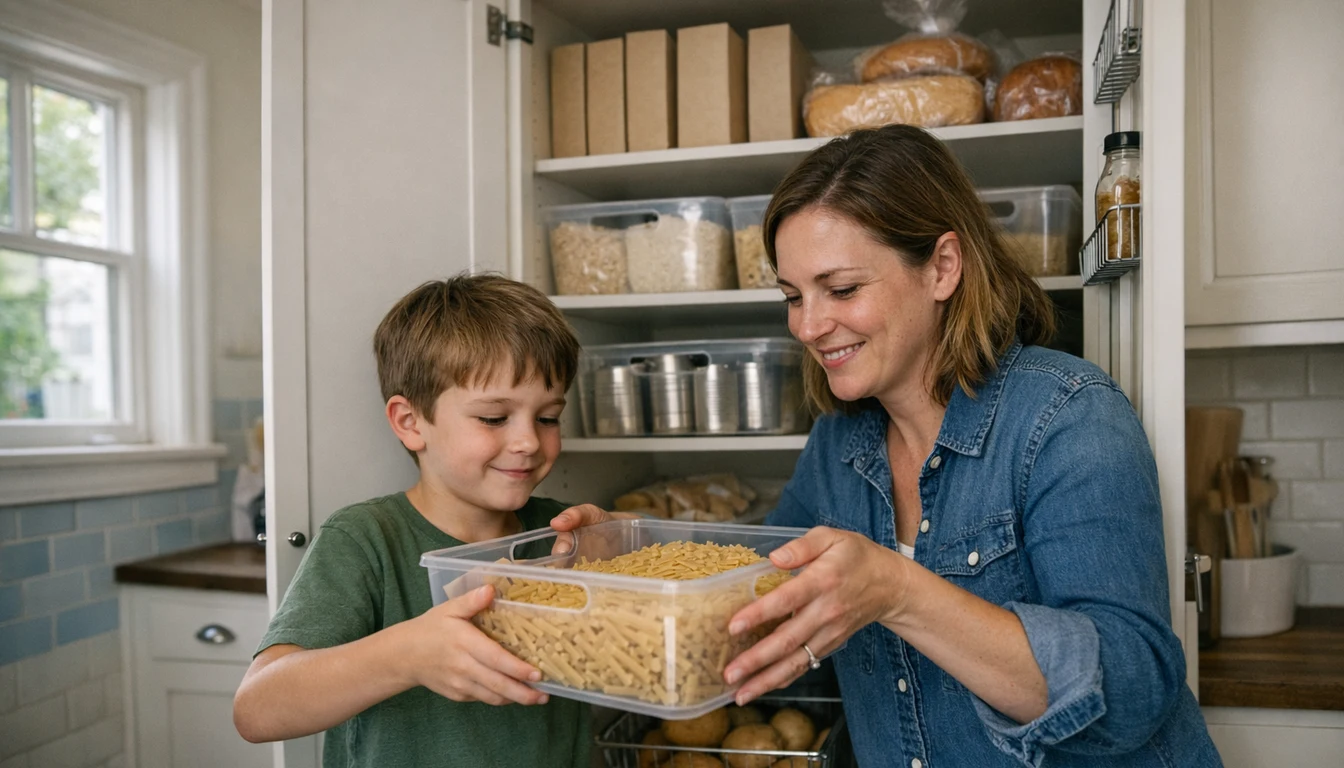
For pantry cabinet organization, this was the change that mattered most. I bought six clear bins with handles, long enough to reach the back of the shelf. Each bin holds one category: breakfast, pasta and rice, snacks, baking. To get to the back, I pull the bin out like a drawer. The peanut butter problem ended that day.
For the two lowest shelves, where we keep heavy stuff, I added pull-out sliding shelves later. They were the most expensive part, about $35 each, and they screw into the cabinet sides. If you rent, the bins alone will get you most of the way there.
Pantry cabinet organization by shelf
| Shelf | What lives there | Storage I use |
|---|---|---|
| Top (step stool) | Holiday baking, backups, paper goods | Labeled bins, one category each |
| Upper middle | Weekly dinners: pasta, rice, canned goods | Long clear bins + a two-step can riser |
| Eye level | Daily food: cereal, bread, peanut butter, coffee | Open front, no bins, tallest items in back |
| Lower middle | Kids’ snacks | One open bin they can pull out themselves |
| Bottom | Heavy: water, potatoes, big rice bag | Sliding shelf + wire basket |
| Inside of the door | Spice backups, foil, small packets | Narrow door rack |
Use the cabinet door
The inside of the door was empty for years. Now it holds a narrow wire rack with four small shelves: spice refills, foil and plastic wrap, seasoning packets, and the little bags of pretzels for lunchboxes.
Measure the gap between the door and the shelf edge before you buy one. My first door rack hit the shelves and the door wouldn’t close. The second one was 3.5 inches deep, and it fits. Our everyday spices live near the stove, and I covered how in spice organization ideas.
Decant only what pests or air would ruin
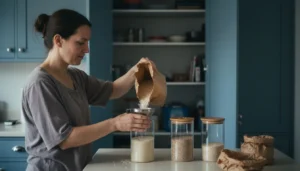
I don’t move everything into matching jars. It takes too long and I can’t keep it up. I decant only what goes stale or attracts bugs once it’s open: flour, sugar, oats, cereal and brown rice.
Penn State Extension notes that flour stored in a warm place is likely to attract insects and recommends airtight containers. Our cabinet is next to the oven, so that was reason enough. I compare the container styles I’ve tried in airtight containers for pantry storage.
Cans, boxes of pasta and jars stay in their packaging. They’re already sealed, and the label tells me the date.
Three pantry cabinet mistakes I made
- Buying bins before measuring the shelves. My first set was too short for the depth, so the back 8 inches turned into a black hole again.
- Putting the kids’ snacks on top. I thought it would stop the snacking. It meant they climbed the shelves, which is the moment I bought the anti-tip straps.
- Stocking up on sale items with no spot for them. Twelve cans of soup on sale ended up on the floor of the cabinet. Now a deal only comes home if it fits in its bin.
What didn’t work for me
A lazy susan on a deep pantry shelf. It works great in a corner cabinet, but in a rectangular one it wasted the corners of the shelf, and tall boxes tipped over every time it turned. I moved it to the fridge, where it holds sauces.
Labels with chalkboard paint also failed. They smudged every time someone pulled a bin out, and after a month half of them said nothing. Plain white labels with a marker have lasted two years. For more tight-kitchen setups, see how to organize a small kitchen and small apartment organization ideas.
Grab the free printable: my Pantry Shelf Map, a one-page sheet to sketch what goes on each shelf, plus a restock list you can tape inside the cabinet door. Get the free sheet →
FAQ
What is the best pantry cabinet organization for deep shelves?
Treat each shelf like a drawer. Long bins with handles that reach the back of the shelf let you pull everything forward at once. Pull-out sliding shelves work even better for heavy items if you can install them.
What should go on each shelf of a pantry cabinet?
Daily food at eye level, weekly dinner staples right above, kids’ snacks where they can reach, heavy items on the bottom, and holiday or backup items on the top shelf you need a step stool for.
Do I need to anchor a freestanding pantry cabinet?
Yes, if it’s tall and freestanding. A full cabinet is top-heavy, and the CPSC recommends anchoring furniture with doors and shelves to the wall to prevent tip-overs. Anti-tip straps are cheap and take a few minutes to install.
Start with the eye-level shelf. Clear it, put only the food your family eats every day on it, and see how many fewer times you buy peanut butter this month.
Get my free Home Reset Planner
The calm, room-by-room planner I use to reset my whole home without the overwhelm. Join the newsletter and I’ll send it straight to your inbox.
No spam, ever. Unsubscribe anytime. — Lena
Keep reading — more on Kitchen & Pantry
Spice Organization Ideas That Survive Holiday Baking
Chest Freezer Organization: How I Stopped Losing Food at the Bottom
Airtight Containers for Pantry: What’s Worth Decanting